
The ISKCON Temple in Delhi, officially known as the Sri Radha Parthasarathy Temple, stands as a monumental symbol of devotion, culture, and architectural splendor in the heart of India’s capital. Established by the International Society for Krishna Consciousness (ISKCON), this temple has become a pivotal hub for spiritual learning, cultural enrichment, and religious gatherings. With its grand structure, rich history, and vibrant activities, the temple attracts devotees and tourists from across the globe.
Historical Background
The journey of the ISKCON Temple in Delhi began with the vision of A.C. Bhaktivedanta Swami Prabhupada, the founder of ISKCON. During the 1970s, Prabhupada envisioned a grand temple in Delhi to spread the teachings of Lord Krishna. His vision was realized when the temple was inaugurated on April 5, 1998, by former Prime Minister Atal Bihari Vajpayee. The temple was constructed by the devotees of the Hare Krishna movement and stands as one of the 40 ISKCON temples built across India.
- Also Read: Famous Holy Places of Delhi
Architectural Marvel
Design and Construction
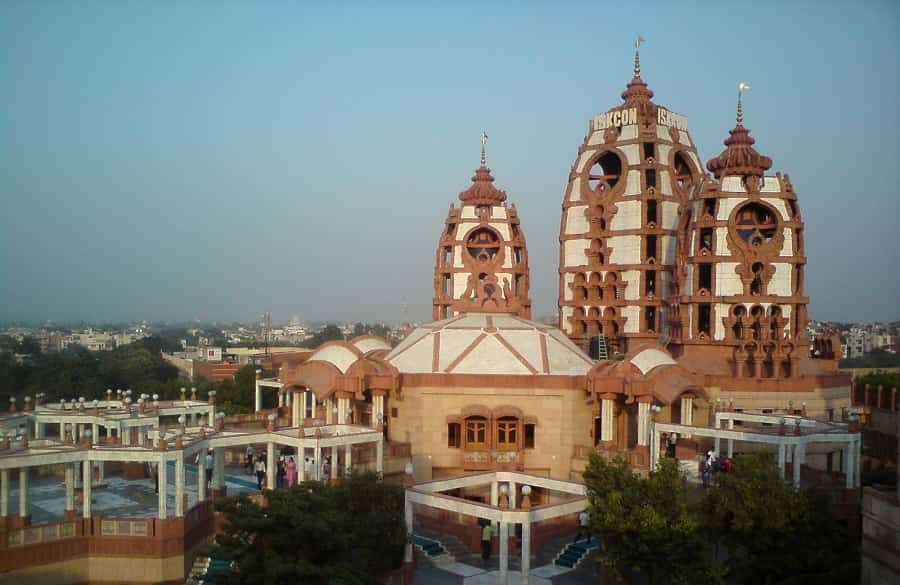
The ISKCON Temple in Delhi is an exemplary model of modern Hindu temple architecture. Designed by the renowned architect Padma Shri Achyut Purushottam Kanvinde, the temple merges traditional Hindu architectural elements with contemporary construction techniques. The entire complex spans three acres and is characterized by its striking white marble exterior, which reflects sunlight to create a mesmerizing visual effect.
Key Features:
- Shikaras (Towers): The temple is adorned with three impressive towers, known as Shikaras, which rise to a height of 90 feet. These towers are constructed using marble, wood, and intricately carved stone, and are topped with segmented stone disks called amalakas. The Shikaras are designed to enhance ventilation and natural lighting while maintaining an aesthetic appeal.
- Dome: The temple features a grand 90-foot tall dome supported by eight pillars. Each pillar is meticulously carved with intricate designs depicting various Hindu deities. The dome’s interior is adorned with elaborate paintings illustrating scenes from the life of Lord Krishna and his beloved Radha.
- Materials Used: The construction of the temple involved 880 tons of steel, 5,500 tons of cement, 25,000 square feet of marble, 75,000 square feet of stone, 260,000 cubic feet of stone chips, and 2,000 cubic feet of wood. The project employed 250 construction workers and cost approximately 12 crore rupees.
Suggested Tour: Delhi Temple Tour
Temple Layout
The temple complex is divided into three main sections:
- First Part: This section houses the idols of Sri Gauri Nital, Sri Nityananda Prabhu, and Sri Chaitanya Prabhu. It serves as a space for devotees to offer their prayers and seek blessings from these revered figures.
- Second Part: Here, visitors will find the idols of Lalita, Vishaka, their Gopis, and Sri Radha Krishna Parthasarathy. This section is dedicated to the worship of Lord Krishna in his divine form.
- Third Part: This area features the idols of Lord Rama, Goddess Sita, Lord Lakshmana, and Hanuman. It highlights the devotion and reverence for Lord Rama and his family.
Cultural and Spiritual Activities
Exhibitions and Shows
The ISKCON Temple offers a variety of exhibitions and cultural shows that cater to visitors of all ages:
- Glory of India Vedic Cultural Centre: This center uses multimedia technologies to present Hindu scriptures and teachings. Highlights include:
- Bhagavad Gita Animatronics: This exhibit uses narration, drama, laser effects, and projections to explain the key concepts of the Bhagavad Gita, Yoga, and the three modes of nature.
- Mahabharata Experience: A light and sound show that brings the epic Mahabharata to life with dramatic effects.
- Ramayana Art Gallery: Displays a collection of oil paintings by ISKCON members from around the world.
- Bhagavat Puran Exhibit: A visual presentation of one of the most significant texts in the Vaishnava tradition.
- Krishna Jayanti Park: This serene park is inspired by Krishna’s playful days and features ponds and waterfalls that add to the temple’s tranquility.
Performances and Lectures
- Centre for Vedic Performing Arts: An open-air amphitheater where traditional musical and dance performances are held.
- Centre for Vedic Studies: Offers seminars and conferences on Vedic philosophy and houses a library with a vast collection of Vedic literature.
Dining and Shopping
- Govinda Restaurant: Located within the temple premises, this restaurant serves pure vegetarian food that is first offered to Krishna before being served to visitors. The menu adheres to the principles of satvik cuisine, avoiding onion and garlic.
- Govinda’s Gift Shop: Sells merchandise and souvenirs related to Lord Krishna, including books, discs, and various tokens of devotion.
Visitor Information
Timings
- Morning: 4:30 am – 12:00 pm
- Evening: 3:00 pm – 9:00 pm
- Closed: 12:00 pm – 3:00 pm (for special programs such as aarti, kirtan, and prasadam)
Aarti Schedule
- Mangala Arati: 4:30 am
- Japa (Mantra) Meditation: 5:15 am
- Darshan Aarti: 7:15 am
- Guru Puja: 7:30 am
- Srimad Bhagavatam Discourse: 8:00 am
- Raj Bhog Aarti: 12:30 pm
- Usthapana Aarti: 4:15 pm
- Sandhya Aarti: 7:00 pm
- Bhagavad Gita Discourse: 8:00 pm
- Sayana Aarti: 8:30 pm
Admission and Facilities
- Entry Fee: Free for all. Additional charges may apply for exhibitions, dining, and shopping.
- Parking: Free parking is available at the temple.
- Dress Code: Decent clothing is advised; shoes must be removed before entering the temple complex.
- Donation: Donation boxes are available throughout the temple for those wishing to contribute.
- Wheelchair Access: The temple is equipped with ramps and lifts for elderly and disabled visitors.
How to Reach
By Metro:
- Nehru Place Metro Station (Violet Line): From the station, you can hail an auto or rickshaw to the temple.
By Air:
- From Indira Gandhi International Airport: Take the Orange Line to New Delhi Metro Station, then transfer to the Yellow Line towards HUDA City Centre. Change at Central Secretariat Station to the Violet Line and proceed to Nehru Place Metro Station.
By Train:
- From New Delhi Railway Station: Walk to the New Delhi Metro Station (Yellow Line) and travel to HUDA City Centre. Transfer to the Violet Line at Central Secretariat Station and proceed to Nehru Place Metro Station.
- From Nizamuddin Railway Station: Take the Pink Line towards Majlis Park and change at Lajpat Nagar to the Violet Line, heading towards Raja Nahar Singh. Arrive at Nehru Place Metro Station.
Nearby Attractions
Kalkaji Temple: An ancient shrine dedicated to Goddess Kali, believed to fulfill devotees’ wishes.
Humayun’s Tomb: A UNESCO World Heritage Site featuring stunning Mughal-era architecture and beautiful gardens.
Lotus Temple: Known for its lotus-shaped structure and peaceful ambiance, the Lotus Temple is surrounded by nine ponds and is a Bahá’í House of Worship.
Khirki Masjid: A historical mosque blending Hindu and Muslim architectural styles, built during the Tughlaq Dynasty.
Ashokan Edict: Located half a kilometer from the temple, this rock inscription contains Buddhist teachings in ancient Prakrit language and Brahmi script.
- Suggested to Read: Popular Devi Temples to Visit in Delhi
FAQs
- Is photography allowed inside the temple?
- No, photography is prohibited inside the temple complex.
- Does the temple have parking facilities?
- Yes, there is free parking available.
- When is the best time to visit the ISKCON Temple?
- September is an excellent time to visit to witness the grand celebrations of Shri Krishna Janmashtami.
- What clothing is appropriate for visiting the temple?
- Visitors are advised to wear modest and respectful clothing. Shoes are not allowed inside the temple.
- Can I make a donation to the temple?
- Yes, donation boxes are located throughout the temple for those wishing to contribute.
- Is outside food permitted inside the temple?
- No, outside food is not allowed. However, the Govinda Restaurant inside the temple serves vegetarian food.
- Can visitors participate in the aarti ceremonies?
- Yes, visitors are welcome to attend and participate in the aarti ceremonies.
- Is the temple open every day?
- Yes, the temple is open every day. Weekdays are generally less crowded compared to weekends.
- Are there facilities for disabled visitors?
- Yes, the temple is equipped with ramps and lifts to accommodate elderly and disabled visitors.
Conclusion
The ISKCON Temple in Delhi is more than just a place of worship; it is a vibrant cultural and spiritual center that offers a blend of architectural beauty, religious devotion, and educational opportunities. Whether you are a devotee, a tourist, or someone interested in exploring the rich traditions of Hinduism, the ISKCON Temple provides a welcoming environment that fosters spiritual growth, cultural understanding, and a sense of inner peace. With its impressive architecture, diverse activities, and serene ambiance, the temple remains a beacon of devotion and cultural heritage in the bustling city of Delhi.