12 Places in Delhi That Foreign Visitors Genuinely Love — Not Just Visit
Delhi is not a city that tries to impress.
It doesn’t present itself neatly. It doesn’t slow down for visitors. It doesn’t soften its edges. Instead, it throws everything at you at once — noise, history, crowds, colour, dust, smells, traffic, warmth, frustration, beauty.
For many foreign travellers, the first day in Delhi is confusing, even exhausting. But something interesting happens after that. Once the shock settles, people begin to notice details. The rhythm of the streets. The layers of history. The way daily life flows around centuries-old monuments.
And that is when Delhi starts to grow on them.
Not all places in Delhi leave the same impression. Some stay in memory long after the trip ends. These are the places foreign visitors don’t just see — they feel.
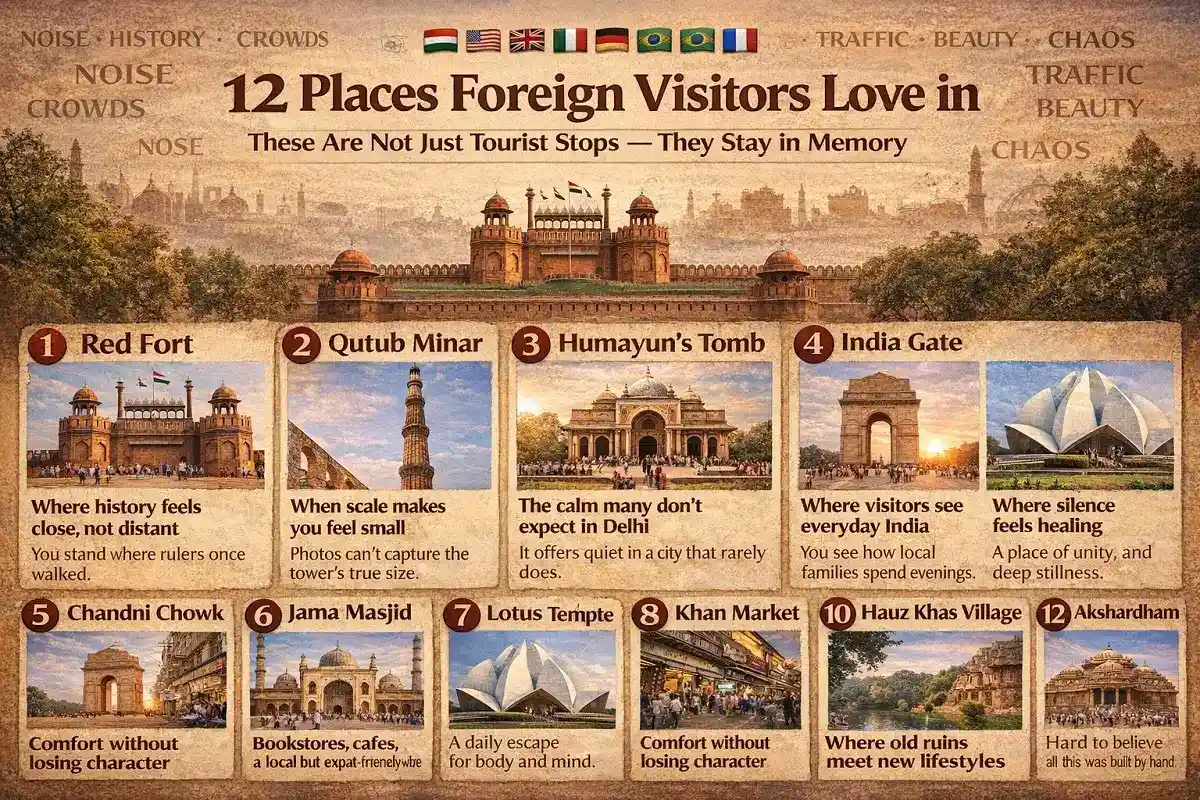
Here are twelve such places, and why they matter.
1. Red Fort – Where History Feels Close, Not Distant
Many travellers walk into the Red Fort expecting a typical monument visit. What they don’t expect is how personal history feels inside.
You are not just seeing old walls. You are walking through spaces where emperors ruled, where revolutions were planned, where independence was declared.
Foreign visitors often slow down here without realising it. They pause in courtyards. They linger in halls. They read the small information boards carefully.
It doesn’t feel rushed.
Why it stays with people:
Because the fort doesn’t shout its importance. It lets you discover it quietly.
Ground reality:
Crowds can be heavy, especially mid-day. Early morning visits feel calmer and far more meaningful.
2. Qutub Minar – When Scale Makes You Feel Small
Photos don’t prepare you for Qutub Minar.
When visitors stand below the tower and look up, there’s a moment of silence. The sheer height, the detailed carvings, the surrounding ruins — everything creates a feeling of humility.
Foreign travellers often spend much more time here than planned, walking slowly around the complex, sitting on the grass, watching local families relax.
Why it connects emotionally:
Because it mixes grandeur with calm. You feel both impressed and peaceful.
Ground reality:
In summer, the heat can drain energy quickly. Late afternoons are easier.
3. Humayun’s Tomb – The Calm Many Don’t Expect in Delhi
After noisy streets and heavy traffic, Humayun’s Tomb feels almost unreal.
The wide gardens, the symmetry, the soft silence — it allows people to breathe.
Many foreigners describe it as the place where Delhi finally slows down for them.
Couples sit quietly. Solo travellers wander with headphones. Photographers wait patiently for light.
Why it works:
Because it offers space — physical and mental — in a city that rarely does.
Ground reality:
Midday sun can be intense. Morning or evening is best.
4. India Gate – Where Visitors See Everyday India
India Gate isn’t just about history. It’s about daily life.
Foreign visitors often come here in the evening and end up staying much longer than planned. Families picnicking, children flying balloons, vendors selling ice cream, teenagers taking selfies — it feels like a community space.
It gives travellers something guidebooks can’t: a window into how Delhi relaxes.
Why it feels special:
Because it’s real, unfiltered, and human.
Ground reality:
Traffic congestion around the area can be frustrating. Walking distance planning helps.
5. Chandni Chowk – Chaos That Teaches More Than Museums
This is where many travellers feel overwhelmed — and fascinated.
Chandni Chowk is loud, crowded, messy, colourful, and intense. Rickshaws squeeze through inches of space. Shopkeepers shout. Spices fill the air. Sweet shops stay packed.
Some visitors struggle here. Others fall in love instantly.
For many foreigners, this becomes their most memorable Delhi experience.
Why people remember it:
Because it feels raw, alive, and deeply human.
Ground reality:
Not ideal for travellers sensitive to noise, crowds, or hygiene concerns. Walking tours help navigate it better.
Suggested Tour:
6. Jama Masjid – Silence Inside, Storm Outside
Step out of Chandni Chowk and into Jama Masjid, and the contrast is immediate.
Inside, everything slows down. The courtyard opens wide. The noise fades. The chaos stays outside.
Foreign visitors often describe a sense of stillness here — a pause in their mental noise.
Climbing the minaret offers a rare view over Old Delhi rooftops, giving perspective to the city’s scale.
Why it stays memorable:
Because peace feels deeper when surrounded by chaos.
Ground reality:
Dress modestly. Be respectful. Photography rules are strict.
7. Lotus Temple – Where Silence Feels Healing
Many travellers don’t expect much before entering. Most leave deeply moved.
Inside the Lotus Temple, silence is absolute. People from different countries, cultures, and religions sit together quietly.
No rituals. No sermons. Just stillness.
For foreigners overwhelmed by Delhi’s sensory load, this space becomes emotionally grounding.
Why it touches people:
Because silence becomes rare, and therefore powerful.
Ground reality:
Long queues are common. Patience is necessary.
8. Lodhi Garden – A Daily Escape for Body and Mind
Lodhi Garden doesn’t feel like a tourist attraction. It feels like a local sanctuary.
Morning walkers, yoga practitioners, couples, artists — everyone uses the space differently.
Foreign visitors often come here repeatedly, using it as their daily pause button.
Why it works:
Because it allows normal life to exist peacefully alongside history.
Ground reality:
Best experienced early morning or sunset.
9. Khan Market – Comfort Without Losing Character
After navigating local markets, many travellers appreciate the calm order of Khan Market.
Bookstores, cafés, restaurants, and boutique shops create a familiar rhythm for international visitors.
It becomes a space to recharge, reflect, and relax.
Why foreigners enjoy it:
Because it balances comfort with authenticity.
Ground reality:
Prices are higher than average.
10. Hauz Khas Village – Where Old Ruins Meet New Lifestyles
Hauz Khas surprises people.
By day, visitors explore medieval ruins and lake views. By evening, the same area transforms into a social hub filled with cafés, music, and conversation.
Foreign travellers enjoy the contrast — history blending naturally with modern life.
Why it stands out:
Because it shows Delhi’s layered personality.
Ground reality:
Night crowds can get heavy. Noise levels rise.
11. National Museum – Understanding India Beyond Surface Culture
Many travellers arrive in India with limited understanding of its depth.
The National Museum changes that.
Spending a few hours here gives visitors context — ancient civilizations, religious evolution, art traditions, political shifts.
It becomes less about sightseeing and more about understanding where you actually are.
Why it matters:
Because knowledge deepens travel experience.
Ground reality:
Requires time and mental attention. Not for rushed schedules.
Suggested Tour:
12. Akshardham – When Craftsmanship Leaves People Speechless
Even travellers unfamiliar with Hindu traditions are stunned by Akshardham’s scale and detail.
The stone carvings, exhibitions, water show, and campus layout reveal a level of craftsmanship rarely seen elsewhere.
Why foreigners admire it:
Because dedication and precision feel universal.
Ground reality:
Strict security. No phones or cameras inside.
Practical Realities Foreign Visitors Should Know
Delhi is rewarding, but it demands patience.
Weather:
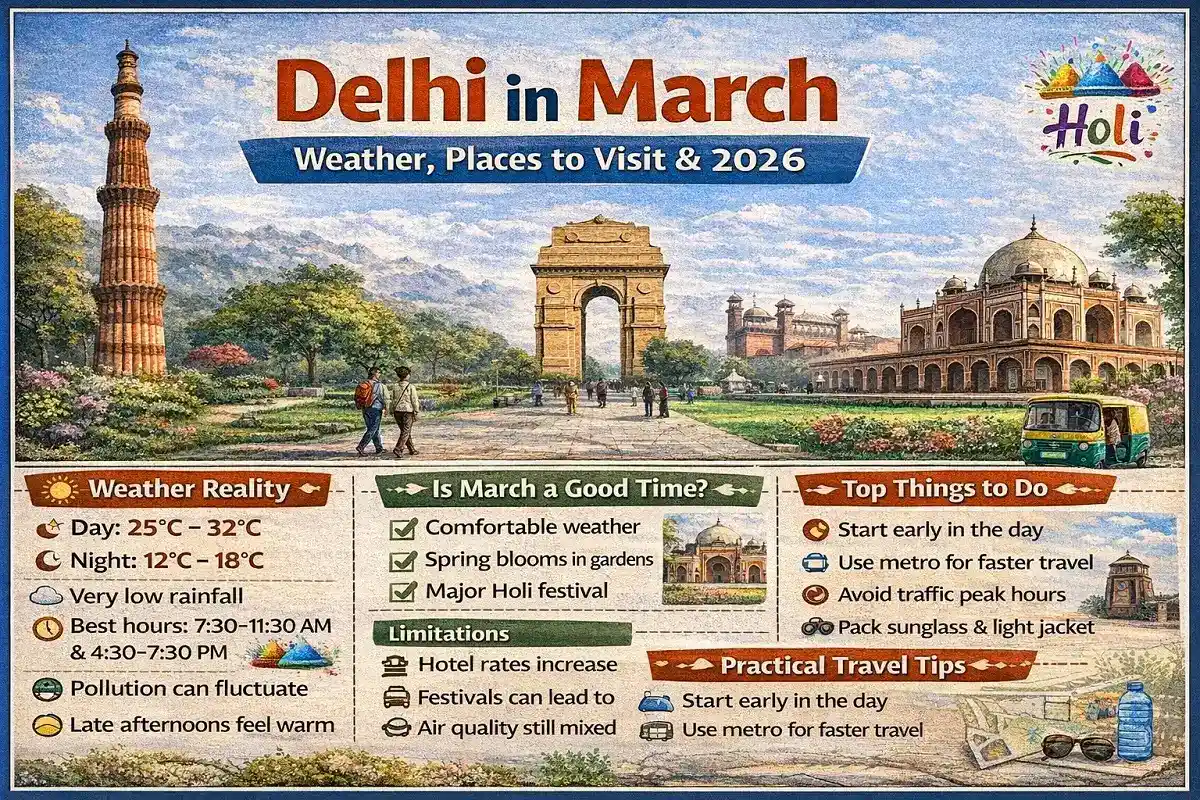
October to March is comfortable. Summers can be punishing. Monsoons bring delays.
Crowds:
They are unavoidable. Early mornings reduce pressure.
Transport:
Delhi Metro is efficient, safe, and tourist-friendly.
Food:
Start cautiously. Hygiene awareness matters.
Mental adjustment:
Delhi requires emotional flexibility. Expect unpredictability.
Who Truly Enjoys Delhi — And Who May Struggle
Delhi suits travellers who:
- Are curious
- Enjoy observation
- Appreciate history
- Accept cultural differences
- Don’t rush experiences
Delhi challenges travellers who:
- Seek quiet resort-style vacations
- Need personal space
- Are sensitive to noise
- Expect predictable schedules
Delhi doesn’t adapt to visitors. Visitors adapt to Delhi.
Real Questions Foreign Visitors Often Ask (FAQs)
1. Is Delhi overwhelming for first-time travellers?
Yes. Most people need one full day to adjust.
2. Is it safe for solo foreign travellers?
Generally yes, with basic awareness and smart planning.
3. How many days are enough for Delhi?
Three to four days allow meaningful exploration.
4. Should I hire guides?
Not necessary, but walking tours improve understanding.
5. Is English commonly spoken?
Yes, especially in tourist areas.
6. What is the best time of day to explore?
Early morning and evening.
7. Is Delhi expensive?
No, by global standards it is affordable.
8. Is street food safe?
Select busy vendors. Start slow.
9. Which areas are best for accommodation?
Connaught Place, South Delhi, Aerocity.
10. What mindset helps most in Delhi?
Patience, curiosity, openness.
Final Thoughts – Why Delhi Leaves a Deep Impression
Delhi does not offer a smooth travel experience.
It offers a real one.
It challenges comfort. It tests patience. It forces awareness. And slowly, it gives back understanding.
Foreign visitors who allow Delhi to unfold naturally often leave with something rare — perspective.
Not just photographs.
Not just memories.
But deeper insight into human life, history, and resilience.
And that is why, for many, Delhi is not just visited — it is remembered.