
Food is the quintessential element of every occasion in the country — and with Diwali just a few days away, I decided to get in the spirit of things and go for a food tour with Delhi Food Adventure, exploring one of the craziest haunts for foodies in India: Chandni Chowk.
First Impressions: Navigating the Maze
Chandni Chowk is one place that intimidates first-timers with its insane traffic, narrow lanes, and an incessant stream of street vendors, peddlers and beggars. Add to that the pungent smells wafting from every corner and the unmerciful weather, and you might be ready to turn back before you’ve even entered.
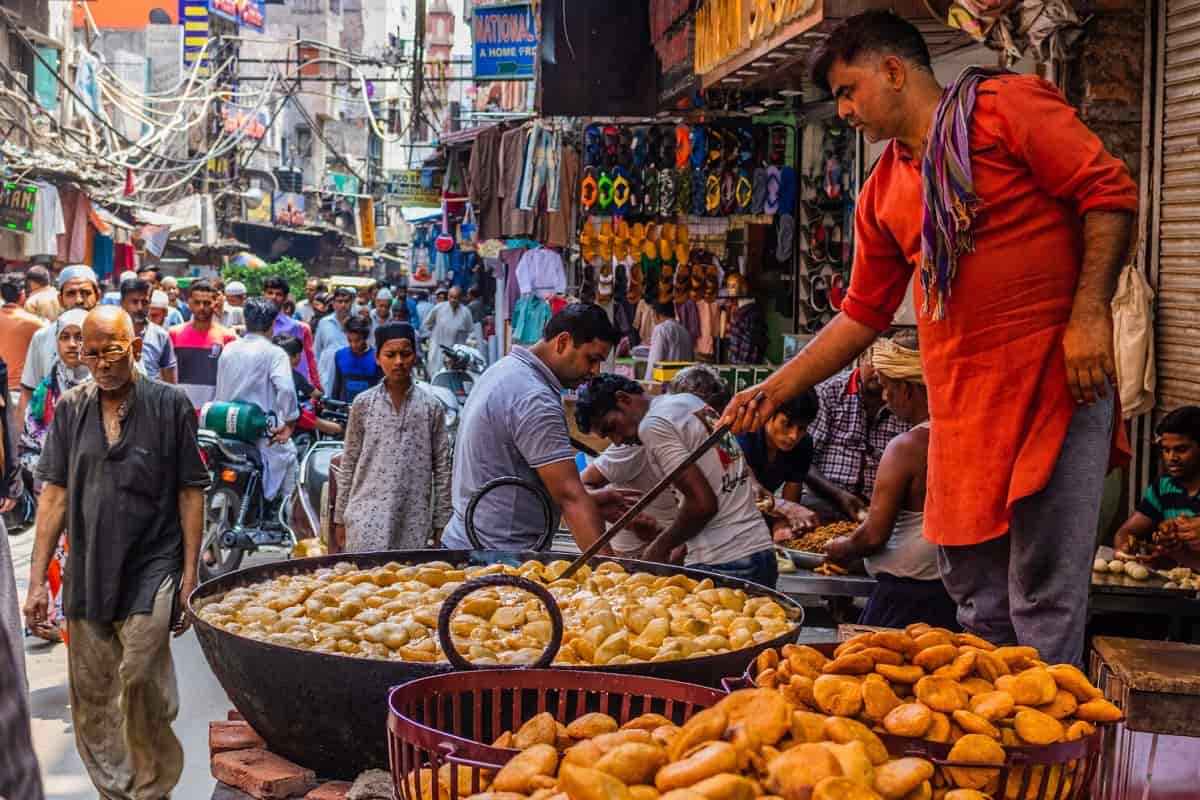
However, our guide Prabhat made sure we did no such thing; he was friendly, chatted with everyone, and ensured we got comfortable in the surroundings before we ventured ahead.
Start Point: Near the Gurdwara
We started our walk next to one of the oldest religious landmarks, Gurudwara Sis Ganj Sahib, which anchors this part of Chandni Chowk’s heritage. This gave us a good orientation before plunging into the food-tour chaos.
- Must Reads on: Famous Food Places in Delhi
Stop 1 – Hygiene & Snacks: Haldiram’s
Our first stop was at Haldiram’s, where we sampled some of the most popular North Indian snacks like golgappa, samosa and raj kachori. Although this Haldiram’s is not unique to Chandni Chowk, it is still one of the better options to find hygienic (by street-food standards) yet authentic fare around this area.
We were off to a great start, with the familiar comforts of a name we recognised.
Stop 2 – Historic Chaat Corner: Natraj Dahi Bhalla Corner
Next up was a tiny hole-in-the-wall shop which has been in operation for over 70 years: Natraj. We sampled dahi bhalla (lentil dumplings in yogurt and chutneys) and aloo tikki. The place is packed, even though the menu is minimal.
The crowd, the narrow lane, the smell of fresh chutney — it all felt like the kind of authentic street food experience people chase.
Stop 3 – Iconic Parathas: Paranthe Wali Gali
Our next destination was the famed Paranthe Wali Gali, a narrow lane dedicated to stuffed Indian breads. Instead of shallow-frying or cooking on a tava, many of the parathas in this lane are deep-fried (in ghee or oil) and the result is a richer taste. NDTV Food+1
We wandered in, paused to take in the smoky smell, the dense crowd, and then queued up for a mixed-stuffing paratha.
On our stroll toward this lane we also passed through lanes lined with houses whose architecture dates back to the Mughal era (late 1600s) — in those moments it felt as though time had stopped in its tracks.
A Shopping Walk: Kinari Bazaar & The Heritage Lanes
After eating so much, we welcomed the chance for some lighter walking through the lanes of Kinari Bazaar. On the way, we came across some heritage homes with faded facades hinting at the late-1600s era.
Kinari Bazaar is the perfect place for wedding shopping — endless lanes of clothes, jewellery, colourful fabrics. Unfortunately for us, we went on a late Sunday evening when many of the shops were shut (save a few).
Still, the ambience of old Delhi, the sensory overload, the jostle of people, the aroma of spices drifting — it all added to the experience.
Also Reads on:
Stop 4 – Sweet & Syrup: The Jalebi Walla
We next stopped at the famous “jalebi walla” — one of those classic sweets shops that have been around for a long time and specialise in thick, hot jalebis, often in desi ghee. delhipedia.com+1
We couldn’t resist ordering a fresh plate. Crisp on the outside, syrupy inside — it was one of the high points (for me) of the tour.
Stop 5 – Mughlai Classics: Karim’s
After a quick rickshaw ride, we made our way to what is arguably the biggest and most famous eating place in the area: Karim’s. The restaurant has been referenced among the top restaurants in Asia by magazines (though I couldn’t locate a precise ‘Time Magazine top restaurants in Asia’ list for this spot).
Its speciality lies in Mughlai food — kebabs, slow-cooked meats, rich gravies, naan or rumali roti. This gave a strong counterpoint to the vegetarian/vegetarian-street-food stops earlier.
We indulged and felt our bellies expand accordingly.
Stop 6 – Final Stop: Al Jawahar
Our final destination was Al Jawahar, another reputable Mughlai cuisine restaurant nearby. We tried mutton korma, changezi chicken (a spicy chicken dish) along with Indian bread, and finished off the tour with a delicious bowl of kheer (rice pudding, rich and creamy).
By this time, the experience had definitely left me with a few extra pounds — but in the best way.
Reflections: Why Chandni Chowk’s Food Scene Works
-
Heritage meets flavour: From lanes that date back to Mughal times, to shops with decades-old legacies (such as Natraj established ~1940s) — you’re not just eating food, you’re entering history.
-
Variety & intensity: Whether it’s speedy chaat, deep-fried parathas, sweets, or slow-cooked Mughlai, the range is dizzying.
-
Street energy: The narrow lanes, jostling crowd, rattling carts, and aromas all intensify the experience — unpleasant for some, but thrilling for food-lovers.
-
A food-tour ready place: If you pick a guided tour (like with Delhi Food Adventure), you get the benefit of local insight, fewer missteps, and more confident exploration.
A Few Tips Before You Go
-
Go hungry: Start early if possible — some queues build up.
-
Comfortable shoes: The lanes are narrow, crowded, and often uneven.
-
Hydrate & pace yourself: With a heavy tasting load, it’s easy to feel full or overwhelmed.
-
Guided tour helps: If you’re unfamiliar, a guide will help you navigate both food and the chaotic lanes.
-
Pick spots you care about: If your priority is hygiene and comfort, places like Haldiram’s are easier. If you want street-authenticity, go for the older tiny shops.
-
Budget for the tour: Many guided food tours in Chandni Chowk include 10-15+ tastings and a rickshaw ride.
Final Word
Walking for a few hours in the choc-a-block, narrow alleys of Chandni Chowk, tasting snack after snack, we finally paused with full bellies and happy hearts. I now understand why people from all over the world flock here to try North Indian food — because Chandni Chowk does it bigger and better (and yummier) than pretty much anywhere else.
Frequently Asked Questions (FAQs)
1. What is Chandni Chowk famous for?
Chandni Chowk in Old Delhi is famous for its street food, Mughlai cuisine, traditional markets, and historical landmarks. It’s one of India’s oldest and busiest food hubs.
2. What are the must-try dishes in Chandni Chowk?
You shouldn’t miss parathas at Paranthe Wali Gali, dahi bhalla at Natraj, jalebis at Jalebi Wala, kebabs at Karim’s, and korma at Al Jawahar.
3. When is the best time to take a food tour in Chandni Chowk?
Late afternoon to evening (around 4–8 PM) is best, as most shops are open and fresh snacks are served. Avoid Sundays evening when many markets close early.
4. Is it safe to eat street food in Chandni Chowk?
Yes, if you’re careful. Choose well-known or high-turnover stalls, avoid raw salads, and go with a guide or reputable tour company like Delhi Food Adventure for hygiene assurance.
5. How do I reach Chandni Chowk for the food tour?
Take the Delhi Metro (Yellow Line) and exit at Chandni Chowk Station. From there, walk or take a short rickshaw ride to the main bazaar area.
6. How long does a typical Chandni Chowk food tour last?
A guided food walk usually lasts 3–4 hours, covering 8–12 tastings, short rickshaw rides, and stops for photos or shopping in Kinari Bazaar.
7. What should I wear for a Chandni Chowk food walk?
Wear comfortable shoes, light clothes, and carry water. Avoid large bags and valuables since the lanes are crowded.
8. Can vegetarians enjoy Chandni Chowk food tours?
Absolutely! There are dozens of pure-veg options — from parathas and chaat to sweets like jalebi and kheer.
9. Are food tours available during Diwali?
Yes, most tours operate around Diwali, though timings may change. It’s a great time to explore festive foods and sweets, but book early due to heavy crowds.
10. How much does a Chandni Chowk food tour cost?
Guided food tours generally range from ₹1,800–₹3,500 per person, depending on the duration and number of tastings.
Suggested Tour: