Purana Qila, Delhi: A Detailed Exploration of History, Architecture, and Legacy
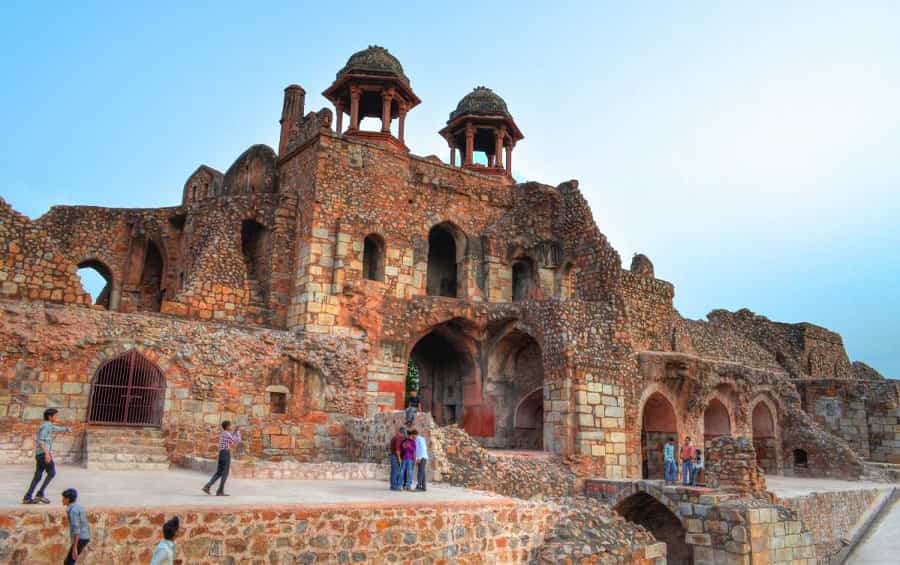
The Purana Qila, or “Old Fort,” located in the heart of New Delhi, India, is one of the city’s oldest and most significant historical monuments. Its name conjures up centuries of legends, conquests, and architectural brilliance, linking both the ancient and medieval periods of India’s rich history. More than just a fort, Purana Qila stands as a symbol of the multi-layered narrative that defines Delhi itself. From its mythological association with Indraprastha, the capital of the Pandavas in the Mahabharata, to its Mughal heritage under Humayun and Sher Shah Suri, the fort has a story to tell at every corner. This essay will explore Purana Qila’s historical significance, architectural marvels, cultural influences, and its enduring relevance in the modern era.
- Location: South Eastern New Delhi, India
- History: Built by Emperor Humayun in 1533; believed to be the site of Indraprastha from the Mahabharata.
- Significance: Represents a blend of Mughal and Indian architecture; historically a royal residence.
- Timings: Open daily from 7:00 AM to 6:00 PM.
- Entry Fee: INR 20 for Indians; INR 200 for foreign tourists.
- Nearest Metro Station: Khan Market Metro Station (2 km away).
- Establishment Date: 1533 by Humayun.
- Dimensions: Covers over 300 acres; perimeter about 1.5 km.
- Architectural Style: Mughal with intricate red sandstone and large gateways.
- Key Structures:
- Bada Darwaza: Main entrance.
- Qila-e-Kuhna Mosque: Notable mosque.
- Sher Mandal: Library where Humayun died.
- Cultural Events: Hosts a sound and light show and various festivals.

1. Mythological Roots: The Site of Indraprastha
The historical significance of Purana Qila is not confined to its Mughal construction. A significant part of its allure lies in the deep-rooted belief that it stands on the ancient city of Indraprastha, the capital of the Pandavas from the Mahabharata, one of India’s two great epics. According to the Mahabharata, the land of Khandavprastha, a barren and forested area, was granted to the Pandavas. With the help of divine intervention from the god Indra and the architect Mayasura, they transformed it into a grand city named Indraprastha.
The connection between Purana Qila and Indraprastha has been a topic of intrigue for both historians and archaeologists. Excavations conducted at the site in the 1950s and 1960s, led by renowned archaeologist B.B. Lal, unearthed Painted Grey Ware (PGW) pottery fragments dating back to around 1500–1000 BCE. This type of pottery is often associated with the later Vedic period, which is believed to coincide with the timeline of the Mahabharata. These findings have added weight to the local traditions that associate Purana Qila with the epic city of Indraprastha, although concrete evidence remains elusive.
Also Read:
2. Historical Significance and Mughal Legacy
The Mughal Emperor Humayun is credited with building the modern structure of Purana Qila in the 16th century, but its location has much earlier associations, as previously mentioned. Humayun envisioned this fort as part of his grand capital city, Dinpanah, meaning “Refuge of Faith,” which was intended to be both a symbol of his imperial power and a sanctuary for learned scholars. Construction began around 1533, with Humayun investing heavily in the fort’s development, using red sandstone and incorporating Islamic architectural styles blended with indigenous design elements.
However, Humayun’s reign was interrupted by Sher Shah Suri, the Afghan noble who overthrew the Mughal emperor in 1540. Sher Shah took control of the fort, renamed it Sher Garh, and added to its architectural glory. His contributions, particularly the construction of the Qila-e-Kuhna mosque and several other structures, added a significant Suri flavor to the fort, blending Afghan and Indian architectural styles.
After Sher Shah’s brief reign, Humayun returned to the throne and re-established his hold on the fort. However, the emperor’s life met a tragic end within the premises of Purana Qila when he fell to his death while descending the steps of the Sher Mandal, a library built within the fort.
3. Architectural Features of Purana Qila
Purana Qila is a blend of military might and aesthetic beauty, with its robust bastions and delicate inlay work representing the synthesis of architectural styles under both the Mughals and Suris. The fort complex stretches across 300 acres and originally featured three prominent gateways, bastions, moats, a mosque, and a library.
Gates of Purana Qila
The most visible and enduring features of Purana Qila are its massive gateways, which are remarkable for their scale, detailing, and function.
- Bada Darwaza: The main entrance to Purana Qila today is the Bada Darwaza, or the “Big Gate.” It is an imposing structure built of red sandstone, featuring marble inlays and intricate carvings. Flanked by two large bastions, the gate’s primary function was defensive, with multiple arrow slits allowing soldiers to fend off potential invaders.
- Humayun Gate: Also known as the Southern Gateway, this two-story structure is crowned with a large arch, which enhances its grandeur. Its design exemplifies a transition between earlier Delhi Sultanate styles and the more elaborate Mughal architecture that would be perfected under Akbar and Shah Jahan.
- Talaqi Darwaza: Located on the northern side of the fort complex, the Talaqi Darwaza, or the “Forbidden Gate,” is a structure shrouded in legend. According to folklore, a queen sealed the gate after her husband perished in battle, and it has remained closed ever since. Architecturally, the gate shares similarities with the other two but is distinguished by its more ornate facade and the combination of red sandstone with marble inlays.
Qila-e-Kuhna Mosque
The Qila-e-Kuhna Mosque, built by Sher Shah Suri in 1542, stands as one of the most architecturally significant structures within Purana Qila. It represents a blend of Islamic and indigenous Indian architectural styles, particularly in its use of color, form, and decoration. The mosque is primarily constructed of grey quartzite, with profuse use of red sandstone and marble. Its five arches and a central iwan (arched gateway) dominate the facade, and the use of calligraphy and intricate inlay work throughout the mosque is indicative of the craftsmanship of the time.
The interior of the mosque, particularly the mihrab (a niche indicating the direction of Mecca), is a highlight of the structure. The mihrab features fine carvings and inlay work, with marble interspersed in geometrical patterns. The ceilings of the mosque are particularly noteworthy for their artistic excellence, with carved squinches filling the corners of the structure, representing the architectural innovation of covering a rectangular space with a circular dome.
Sher Mandal
The Sher Mandal is another important structure within Purana Qila, believed to have been built by Sher Shah Suri as a pleasure pavilion. After Humayun reclaimed the fort, he converted the building into a library. The structure itself is an octagonal tower made of red sandstone, with white marble inlay work. The architectural style of the Sher Mandal is a precursor to the more elaborate Mughal pavilions seen in later constructions, such as the palaces in Fatehpur Sikri and the Red Fort.
It was on the steps of this very structure that Humayun fell to his death in 1556, marking a tragic end to a ruler whose life was filled with both triumph and turmoil.
Other Notable Structures
- The Stepwell (Baoli): A baoli, or stepwell, is located within the fort complex. Stepwells were common features in Indian forts and cities, providing a crucial source of water in arid regions. The stepwell in Purana Qila is a relatively simple structure but offers a glimpse into the water management systems of medieval India.
- The Hammam (Bathhouse): The hammam, located underground, was designed for royal bathing. It featured terracotta pipes for water supply and drainage, showcasing the engineering skills of the era.
- Gardens and Layout: Although much of the original fort has not survived, the remaining structures and the surrounding gardens give a sense of the fort’s original grandeur. The fort’s location along the Yamuna River meant that it was strategically important, with the river acting as a natural barrier on one side and the Aravalli Hills on the other.
4. Cultural and Historical Legacy
Purana Qila is more than just a historical monument; it has played a vital role in various periods of Delhi’s history, right up to the modern era. After Humayun’s death and the rise of Akbar, the fort lost some of its significance as the Mughal capital moved to Fatehpur Sikri. However, the fort’s central location and symbolic value kept it relevant through successive regimes.
During the British colonial period, Purana Qila was used for various administrative purposes. Notably, it was aligned with the central vista (Rajpath) designed by Sir Edwin Lutyens during the construction of New Delhi between 1912 and 1930. This alignment connected the modern capital with its ancient past.
During World War II, the fort was used as an internment camp for Japanese civilians living in British India. Later, during the Partition of India in 1947, Purana Qila became a refugee camp for thousands of displaced people who fled to Delhi from newly formed Pakistan. For several months, the fort’s premises housed families struggling with the devastation of Partition.
5. The Purana Qila Today
Today, Purana Qila stands as a testament to Delhi’s multi-layered history, from its mythological beginnings to its role in the Mughal Empire and beyond. The fort is open to the public and offers visitors a chance to explore its historical structures, from the towering gates to the intricate mosque and the haunting beauty of the Sher Mandal. Inside the fort, there are two museums: one dedicated to the archaeological finds from Purana Qila and other sites in Delhi, and another housing a collection of stolen antiquities that have been recovered by Indian law enforcement agencies.
Additionally, the fort has become a cultural hub in the city, hosting regular events such as the annual Delhi Classical Music Festival and a popular sound and light show that narrates the history of Delhi’s seven cities. This show is a spectacle that blends art, history, and technology, recreating the stories of Delhi’s past through music, light, and narration.
The fort remains a popular tourist destination, drawing thousands of visitors every year who come to witness its grandeur and delve into the rich history of one of the world’s oldest continually inhabited cities.
6. Conclusion: Purana Qila’s Enduring Importance
Purana Qila’s significance goes far beyond its role as a fort. It is a symbol of Delhi’s ability to adapt, endure, and evolve through centuries of change. From its mythical association with the Pandavas to its Mughal origins and its use during the British Raj, the fort encapsulates the story of Delhi as a city of empires and conquests, of resilience and rebirth.
Today, as India’s capital continues to grow and change, Purana Qila stands as a reminder of the city’s ancient roots, a testament to its timelessness. It is a living monument where history is not just preserved but celebrated, making it an integral part of India’s cultural heritage.
Check out: