
Chandni Chowk Delhi: Complete Travel Guide 2026
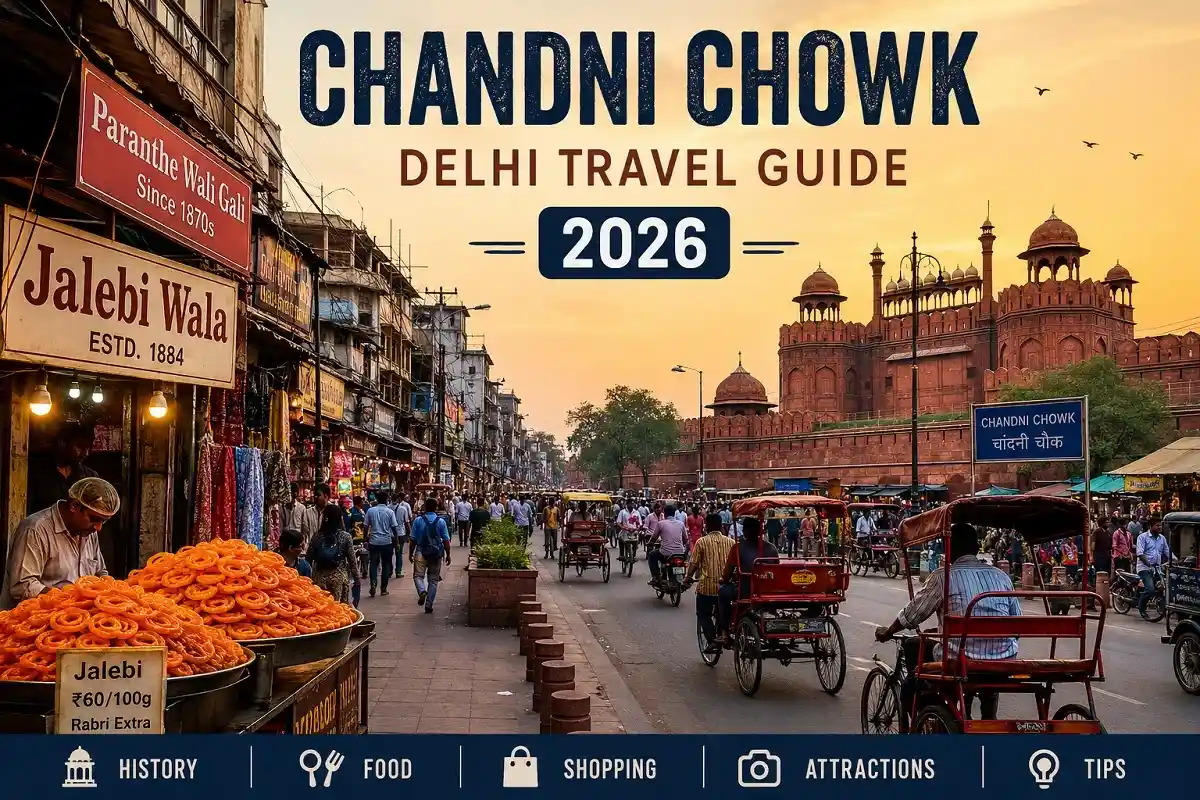
If you have never walked through Chandni Chowk, you have not really seen Delhi. That sounds like a bold claim, but anyone who has stood at the entrance of this 370-year-old bazaar — the smell of freshly fried jalebis mixing with the shout of rickshaw pullers, the flash of silver jewellery catching the afternoon light — will tell you the same thing. Chandni Chowk is not just a market. It is a living, breathing archive of everything Old Delhi has been and still is.
Built by Mughal Emperor Shah Jahan in 1650 as the main commercial artery of his new capital Shahjahanabad, this Old Delhi bazaar today stretches nearly 1.5 km from the Red Fort (Lal Qila) to the Fatehpuri Mosque. It is home to thousands of shops, hundreds of street food stalls, and more than a dozen specialised wholesale markets, each with its own identity and character.
Whether you are a first-time visitor trying to figure out where to start, a traveller looking for the best street food in Delhi, or a buyer sourcing bulk wedding supplies, this guide covers everything you need to know for 2026.
Quick Overview
| Location | Old Delhi, Delhi 110006 |
| Market Timings | 10:00 AM – 8:00 PM (most shops); closed Sunday for many |
| Nearest Metro | Chandni Chowk Metro Station — Yellow Line (Line 2) |
| Best Time to Visit | October to March; weekday mornings for fewer crowds |
| Entry Fee | Free (market area). Red Fort: ₹35 Indians / ₹550 foreign nationals (without museum) |
| Average Budget | ₹700–₹1,500 per person for food + sightseeing (budget visit) |
| Article Last Updated | June 2026 |
A Brief History of Chandni Chowk
Shah Jahan built Chandni Chowk in 1650 as part of his new Mughal capital, Shahjahanabad — the city that became the heart of what we today call Old Delhi. The name itself is poetic: ‘chandni’ means moonlight, and ‘chowk’ means crossroads or square. Legend has it that a central reflecting pool once mirrored moonlight here, giving the Shahjahanabad bazaar its enduring name.
Mughal princess Jahanara Begum, Shah Jahan’s daughter, is widely credited with designing and overseeing the bazaar. At its peak, Chandni Chowk was one of the most prosperous markets in all of Asia, attracting merchants from Persia, Central Asia, and Europe.
The market survived Mughal decline, British colonialism, the upheaval of 1947, and decades of rapid urbanisation. It adapted at every turn — sometimes imperfectly, often chaotically — but it never stopped. That resilience is part of what makes walking through it feel like stepping through layers of time.
In 2021, a major redevelopment project pedestrianised the main 1.3 km stretch from Red Fort to Fatehpuri Mosque, making Chandni Chowk more walkable than at any point in recent memory.
Major Markets Inside Chandni Chowk
What most people call ‘Chandni Chowk’ is actually a collection of specialised bazaars packed into one dense neighbourhood. Each has its own personality. Here is a breakdown of the main ones you should know before you visit:
Khari Baoli — Asia’s Largest Spice Market
Located at the western end of Chandni Chowk, Khari Baoli is said to be Asia’s largest wholesale spice market. The sacks of dried chillies, turmeric, cardamom, and saffron stacked along the narrow lane are a photographer’s dream and a sensory overload for everyone else. Even if you are not buying in bulk, the market sells retail quantities at prices you will not find anywhere else in Delhi.
What to buy: Whole spices, dry fruits, pulses, tea, and cooking essentials. Prices are typically 20–40% cheaper than supermarkets.
Kinari Bazaar — Wedding Supplies & Embroidery
If you are shopping for a wedding — your own or someone else’s — Kinari Bazaar is where Delhi comes to buy. This lane is packed with shops selling lace, ribbons, zari (gold and silver thread embroidery), bridal accessories, and decorative tassels. The sheer variety is staggering.
What most people do not realise is that many shops here sell wholesale to retailers across India. Even as a retail buyer, you can negotiate decent prices if you are buying in quantity.
Dariba Kalan — The Silver Street
Dariba Kalan, also called the Old Delhi silver market, is one of the oldest jewellery streets in the country. It has been selling silver and gold jewellery for over 350 years. The lane is narrow and packed, but the craftsmanship on display — intricate silver work, antique-style bangles, anklets, and nose rings — is worth the crowded walk.
Prices are generally lower than branded jewellery stores. Always check for BIS hallmark and ask for a weight-based price quote before buying.
Nai Sarak — Books and Stationery
Nai Sarak is the go-to destination for students, educators, and anyone who needs textbooks, competitive exam guides, or stationery at wholesale prices. Publishers and distributors operate here, and prices can be 30–50% below MRP for many academic titles.
Meena Bazaar — Fabric and Ethnic Wear
Near Jama Masjid, Meena Bazaar specialises in ethnic fabrics, kurtas, salwar suits, and traditional wear. This is a good place to pick up everyday Indian clothing or fabric by the metre. Bargaining is expected and completely normal here.
Best Street Food in Chandni Chowk — What to Eat and Where
Chandni Chowk’s food scene is legendary. This is not just tourist hype — Delhi’s most serious food lovers make regular trips to Old Delhi for specific dishes. If you skip the food, you have missed half the point of coming here.
Paranthe Wali Gali
This narrow lane off the main street has been famous for parathas for well over a century, with several shops claiming origins as far back as the 1870s. Shops like Pt. Gaya Prasad Shiv Charan and Kanhaiyalal Durga Prasad Dixit serve stuffed parathas with unusual fillings — dried fruit, rabri (condensed milk), banana — alongside the more familiar potato and paneer versions. Expect to pay ₹80–₹150 per paratha with accompaniments.
Practical note: The lane gets very crowded by 11 AM. Go before 10 AM if you want a seat, or grab a paratha to eat standing. The experience is the same either way.
Old Famous Jalebi Wala (Est. 1884)
Near the Dariba Kalan intersection, this over-140-year-old shop — established in 1884 by Lala Nem Chand Jain — fries jalebis fresh in pure desi ghee using khandsari sugar. The result is crispy on the outside and deeply syrupy inside, nothing like the jalebis you get elsewhere. Jalebis are priced at ₹600 per kg; a standard 100g portion costs approximately ₹60. Rabri is available separately. The shop is open daily from 8 AM to 10 PM.
Natraj Dahi Bhalle Wala
Operating since 1940, Natraj serves some of the most celebrated dahi bhalle in Delhi. Soft lentil dumplings in cold yogurt, topped with tamarind chutney, green chutney, and sev. A plate costs ₹60–₹80 and is filling enough to serve as a light meal.
Karim’s Restaurant (Est. 1913)
Established in 1913 by Haji Karimuddin near Jama Masjid, Karim’s is an Old Delhi institution. This is not street food — it is a full sit-down Mughlai restaurant at 16, Gali Kababian, Jama Masjid. The nihari (slow-cooked meat stew), mutton burra (grilled on charcoal), and tandoori naan are reasons people plan entire trips around a meal here. Budget ₹300–₹600 per person (2026 prices).
Other Must-Try Items
- Kulfi Faluda — from the old kulfi shops near Kinari Bazaar
- Biryani — multiple shops around Jama Masjid serve excellent Pushtini-style biryani
- Lassi — thick, creamy, served in clay matkas near the main chowk
- Chole Bhature — for a dedicated stop, Sita Ram Diwan Chand in Paharganj (a separate 15-minute auto ride) is the classic Old Delhi choice
How to Reach Chandni Chowk
By Metro — Recommended
The easiest and fastest way to reach Chandni Chowk from anywhere in Delhi is by metro. Take the Yellow Line (Line 2, Samaypur Badli to HUDA City Centre / Millennium City Centre, Gurugram) and get off at Chandni Chowk Metro Station. The station exit opens almost directly into the market.
- From New Delhi Railway Station: Yellow Line, one stop north. Travel time: 5 minutes.
- From Indira Gandhi International Airport: Airport Express Line to New Delhi Station → Yellow Line to Chandni Chowk. Total: 45–55 minutes. Metro fare: ₹80–₹110.
By Auto-Rickshaw or Cab
Auto-rickshaws are available from the metro station exit and are the best option for reaching specific inner lanes. Agree on a fare before getting in — most rides within the market area cost ₹30–₹60. Ola and Uber operate in the area but traffic can make them slower than walking from the metro during peak hours.
By Bus
DTC buses connect Chandni Chowk to most major Delhi areas. Bus stops are located near Red Fort and the main market entrance. Check the DTC app or Google Maps for current routes.
Parking Note
Driving to Chandni Chowk on a weekday is not recommended. The main road is pedestrianised, inner lanes are narrow, and parking is extremely limited. If you must drive, use the multi-level parking facility near Red Fort and walk or take a cycle rickshaw into the market.
Distance from Major Delhi Landmarks
| From Location | Distance | Travel Time (Metro) |
| IGI Airport | ~22 km | 50–60 min |
| New Delhi Railway Station | ~1.5 km | 5 min (1 stop) |
| Connaught Place | ~4 km | 10 min (2 stops) |
| India Gate | ~5 km | ~20 min (metro + walk) |
| Karol Bagh | ~6 km | 15 min (2 stops) |
| Hauz Khas | ~18 km | 35 min (7 stops) |
Best Time to Visit Chandni Chowk
From a weather standpoint, October to March is the best time to visit Chandni Chowk. Delhi winters (November–February) are cool and dry, making the long walks through crowded lanes much more comfortable. Summers (April–June) are brutal — temperatures regularly cross 42°C and the narrow market lanes trap heat badly.
From a crowd standpoint, weekday mornings (Tuesday to Friday, before noon) are significantly less hectic. Saturday afternoons are the most crowded, especially in Kinari Bazaar and near Jama Masjid.
Festival season: During Diwali and the wedding season (October–December), the market is electric but extremely crowded. This is the best time for wedding shopping variety — arrive early and build in extra time.
Avoid visiting on Monday — many older shops remain closed. Sunday is a mixed day; some markets like Meena Bazaar are busier with weekend shoppers, while others observe a half-day.
What a Real Visit to Chandni Chowk Looks Like
On the ground, Chandni Chowk is an assault on the senses — in the best possible way. The main road was pedestrianised and redeveloped in September 2021, making the core stretch from Red Fort to Fatehpuri Mosque considerably easier to walk. But the real action is in the lanes that branch off this central road.
Most experienced visitors follow a rough sequence: start at the Red Fort end around 9:30–10 AM, eat breakfast at Paranthe Wali Gali, then work through the specialised markets in a loose loop — Kinari Bazaar, Dariba Kalan, Khari Baoli — before ending near Jama Masjid for a late lunch at Karim’s or one of the surrounding biryani shops.
One mistake many people make is underestimating how long they will spend here. Most people plan for two hours and stay for five. Build in extra time, wear comfortable shoes, and carry a small shoulder bag rather than a large backpack.
Cycle rickshaws are still the most practical way to move between markets without getting lost on foot. The riders know every lane, and most charge ₹30–₹80 per trip.
Chandni Chowk Shopping Tips: What to Buy and How to Bargain
Shopping in the Chandni Chowk market is a skill. A few practical points will save you money and frustration:
- Always compare prices across two or three shops before buying. The first price quoted is almost never the final price.
- For spices, dry fruits, and fabrics, buying in small quantities is fine. But if you are buying in larger volumes, mention that upfront — you will get a better rate.
- Wholesale markets like Khari Baoli may have minimum purchase requirements for certain items. Ask before you browse.
- Carry cash for smaller stalls and interior lane shops. Most larger shops and showrooms now accept UPI (PhonePe, Google Pay) — adoption has grown significantly since 2022. ATMs are available near the metro exit and near Red Fort.
- For silver jewellery at Dariba Kalan, always ask for BIS hallmarked pieces and insist on weight-based pricing.
- Branded goods at suspiciously low prices are almost certainly counterfeit. Do not expect otherwise in any market of this type.
Places to See Near Chandni Chowk
Chandni Chowk is surrounded by some of Delhi’s most important historical sites. Most are within walking distance or a short auto-rickshaw ride:
- Red Fort (Lal Qila) — UNESCO World Heritage Site. Main entrance faces Chandni Chowk directly. Open Tuesday–Sunday, 9:30 AM–4:30 PM. Entry: ₹35 for Indian nationals / ₹550 for foreign nationals (without museum); ₹870 with museum. Closed Monday.
- Jama Masjid — One of India’s largest mosques, built by Shah Jahan (construction 1644–1656). Entry free; modest clothing required. Located approximately 400 metres from Chandni Chowk.
- Gurudwara Sis Ganj Sahib — An important Sikh pilgrimage site on the main Chandni Chowk road. Open 24 hours, free entry.
- Gauri Shankar Temple — One of Delhi’s oldest temples, located on the main market street.
- Digambar Jain Lal Mandir — One of Delhi’s oldest Jain temples, near the Red Fort end of Chandni Chowk.
Common Mistakes to Avoid at Chandni Chowk
- Going on Monday — Many shops, especially older establishments, are shut. Check specific market days before visiting.
- Visiting at peak afternoon hours on weekends — The crowd density between 2–5 PM on Saturday makes movement genuinely difficult. Morning visits are far more comfortable.
- Carrying large luggage — The lanes are narrow. A large rolling suitcase is impractical and will slow you and everyone around you down.
- Relying on Google Maps for inner lanes — GPS accuracy drops inside the dense market gullies. Ask locals or your cycle rickshaw driver for directions.
- Drinking water from unknown sources — Stick to sealed bottled water. Hygiene standards vary significantly across food stalls.
- Negotiating aggressively in wholesale markets — These are primarily trade markets. Excessive bargaining in a wholesale context is considered bad form and may result in shopkeepers refusing to engage.
Pro Tips for Getting the Most Out of Chandni Chowk
- Start your visit by 9–9:30 AM. Most shops open from 10 AM but the lanes are far more manageable in the early morning.
- Hire a local guide for 2–3 hours if this is your first visit. Many cycle rickshaw riders double as informal guides and know which shops are genuinely historic versus tourist-oriented.
- The pedestrianised main road is now well-lit and cleaner than the inner gullies. Use it as your navigation spine and explore the branching lanes on foot.
- For serious spice shopping, visit Khari Baoli on a weekday morning when delivery activity is lower and shopkeepers have more time to explain products.
- If you are visiting with senior citizens or people with mobility limitations, the main road pedestrian stretch is largely manageable. The narrow inner lanes can be challenging — plan accordingly.
- Most larger shops in Chandni Chowk now accept UPI payments. Smaller stalls and older shops in the interior lanes remain cash-preferred.
Budget Breakdown for a Day at Chandni Chowk (2026)
| Expense | Estimated Cost (2026) |
| Metro (round trip from central Delhi) | ₹40–₹80 |
| Breakfast — parathas + chai at Paranthe Wali Gali | ₹100–₹200 |
| Street food — dahi bhalle, jalebi, lassi | ₹150–₹300 |
| Sit-down lunch at Karim’s (optional) | ₹300–₹600 per person |
| Cycle rickshaw — 2–3 stops within market | ₹60–₹150 |
| Red Fort entry (Indian nationals) | ₹35 |
| Shopping (budget estimate) | ₹300–₹2,000+ |
| Total (food + metro + sightseeing, no major shopping) | ₹700–₹1,500 |
Chandni Chowk vs Connaught Place: Which Should You Visit?
This is a question many first-time Delhi visitors ask. The honest answer: they serve completely different purposes.
| Factor | Chandni Chowk | Connaught Place |
| Best For | Wholesale, ethnic goods, street food, history | Branded retail, cafes, global chains |
| Price Range | Budget to mid-range | Mid-range to premium |
| Vibe | Chaotic, historic, authentic | Organised, modern, cosmopolitan |
| Crowd Level | Very high | Moderate |
| Food Focus | Street food, Mughlai | Multi-cuisine, cafes, QSR chains |
| Best Reason to Go | Real Delhi experience, price advantage | Comfort, brands, air-conditioned spaces |
If you want the real Delhi experience — the noise, the history, the food, the bargaining — visit Chandni Chowk. If you want a calmer shopping experience with known brands, go to Connaught Place. Most serious Delhi visitors will do both.
Frequently Asked Questions
What is Chandni Chowk famous for?
Chandni Chowk in Old Delhi is famous for three things: its wholesale and specialised markets (spices at Khari Baoli, jewellery at Dariba Kalan, wedding supplies at Kinari Bazaar, books at Nai Sarak), its legendary street food (parathas, jalebis, dahi bhalle, biryani), and its Mughal-era history dating to 1650. It is one of the oldest and busiest markets in Asia.
What is the best time to visit Chandni Chowk?
The best time to visit Chandni Chowk is between October and March, when Delhi’s weather is cooler and more comfortable for long walks through crowded lanes. Within the day, Tuesday to Friday mornings before noon offer the least crowded experience. Avoid Monday — many older shops remain closed.
How do I reach Chandni Chowk from Delhi airport?
From Indira Gandhi International Airport, take the Airport Express Metro Line to New Delhi Metro Station. Then switch to the Yellow Line (Line 2) and travel one stop north to Chandni Chowk Metro Station. Total journey: approximately 50–60 minutes. Metro fare: ₹80–₹110. This is the fastest, cheapest, and most hassle-free option.
What should I buy in Chandni Chowk Delhi?
Chandni Chowk is ideal for wholesale spices and dry fruits (Khari Baoli), silver and gold jewellery (Dariba Kalan), bridal and wedding accessories (Kinari Bazaar), academic books and stationery (Nai Sarak), and ethnic fabrics (Meena Bazaar). Prices are significantly lower than regular retail stores for most of these categories, particularly for bulk purchases.
Is Chandni Chowk safe for tourists?
Yes, Chandni Chowk is generally safe for tourists. High footfall throughout the day naturally discourages petty crime. That said, keep your phone and wallet secure in crowded lanes, be cautious of overcharging by unauthorised guides, and avoid displaying expensive jewellery. Daytime travel is recommended; stick to well-lit areas in the evening.
What are the Chandni Chowk market timings 2026?
Most shops in Chandni Chowk are open from 10:00 AM to 8:00 PM. Many shops remain closed on Sunday; some observe Monday as their weekly off. Wholesale markets like Khari Baoli are busiest on weekday mornings. Street food stalls at Paranthe Wali Gali and Old Famous Jalebi Wala start operating from 7:30–8:00 AM.
Can I visit Chandni Chowk by car?
Technically yes, but it is strongly not recommended. The main Chandni Chowk road has been pedestrianised since 2021, and inner lanes are extremely narrow with near-zero parking. If you must drive, use the multi-level parking facility near Red Fort and enter the market on foot or by cycle rickshaw. Metro is far more practical.
Is there an entry fee for Chandni Chowk market?
No entry fee for the Chandni Chowk market itself — it is an open public market. However, visiting the Red Fort (Lal Qila) at the eastern end costs ₹35 for Indian nationals and ₹550 for foreign nationals (without the on-site museum). Museum inclusion costs ₹870 for foreign nationals. Jama Masjid entry is free.
How many hours should I plan for a Chandni Chowk visit?
Plan a minimum of 4–5 hours for a meaningful visit. If you want to properly explore the main markets, eat well, and also visit the Red Fort or Jama Masjid, a full day of 7–8 hours is realistic. Most visitors consistently underestimate how long they end up spending here — plan for more time than you think you need.
Which is the nearest metro station to Chandni Chowk?
Chandni Chowk Metro Station on the Yellow Line (Line 2) is the nearest station and exits almost directly into the market. If coming from the airport, take the Airport Express to New Delhi Station and switch to the Yellow Line — one stop north reaches Chandni Chowk.
What are the best food places in Chandni Chowk for 2026?
The most well-regarded food spots include: Paranthe Wali Gali (traditional stuffed parathas, over 100 years old), Old Famous Jalebi Wala near Dariba Kalan (pure ghee jalebis since 1884), Natraj Dahi Bhalle Wala (since 1940), and Karim’s near Jama Masjid (full Mughlai restaurant since 1913). All four are genuine institutions — not tourist traps.
Is Chandni Chowk good for wedding shopping?
Chandni Chowk is one of the best places in India for wedding shopping. Kinari Bazaar specialises in bridal accessories, zari, lace, and embellishments. Meena Bazaar is excellent for ethnic fabrics. Dariba Kalan offers silver jewellery. Many Delhi families and retailers from across India do their wedding shopping here for the variety and competitive pricing — especially in the October–December season.
Conclusion
Absolutely — and sooner rather than later. Chandni Chowk in 2026 is cleaner and more accessible than it has been in decades, thanks to the pedestrianisation of the main road and improved metro connectivity. The core of what makes this Old Delhi market remarkable — the food, the specialised bazaars, the layered history — remains completely intact.
Come for the parathas. Stay for the silver market. Get lost in Khari Baoli. Eat at Karim’s. Sit for a moment in the courtyard of Jama Masjid. This is one of those rare places where the best travel advice is simply: give it more time than you think you need, and follow your nose.
If you are planning a trip to Delhi and need help with itinerary planning, customised tours, or experienced local guides for Old Delhi, reach out to our travel experts. We offer verified, on-ground guides for Chandni Chowk heritage walks and full-day Old Delhi food and market tours.