Delhi Travel Cost Breakdown for Foreign Tourists
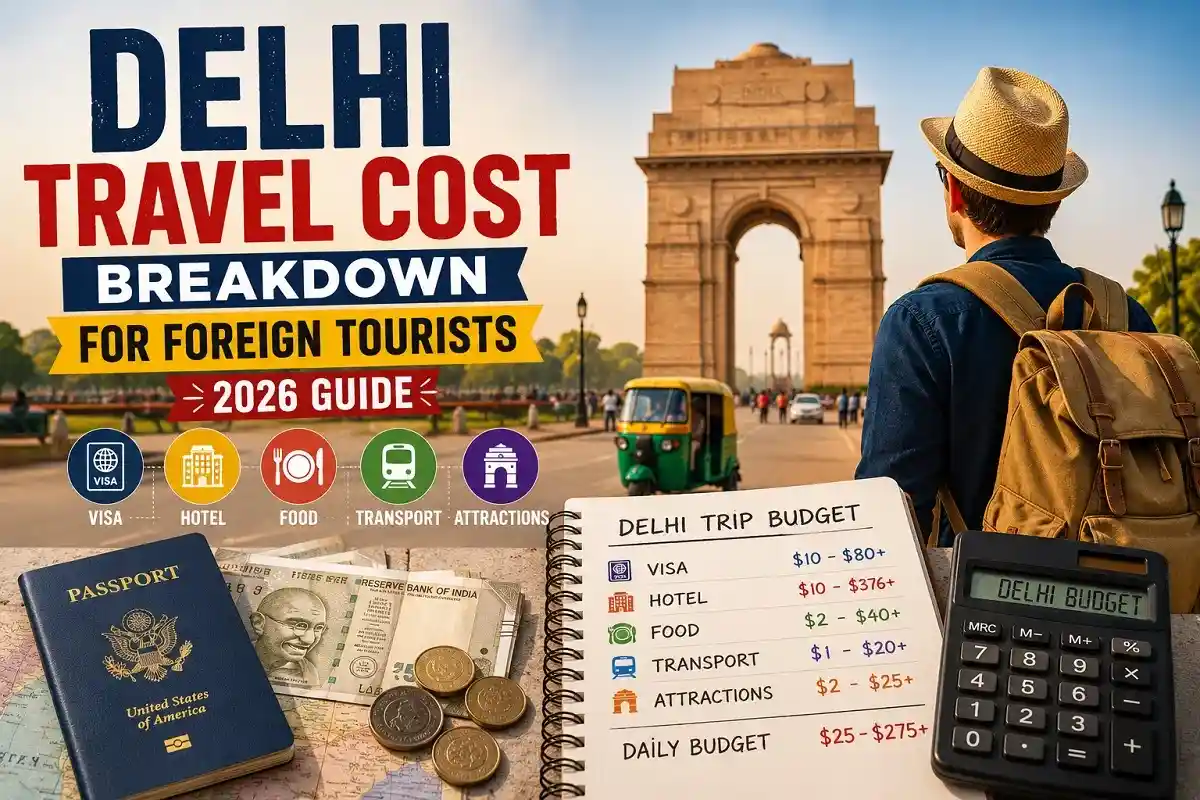
Delhi is one of those cities where your budget can swing wildly depending on a handful of decisions — which hotel area you pick, whether you use the Metro or app-cabs, and how many “foreigner-priced” monuments you visit. If you’re planning your first trip, this guide breaks down exactly where your money goes, with real numbers for visas, hotels, food, transport, and sightseeing.
Quick Overview
Visa Cost: The First Expense You’ll Pay
Before you even land, the e-Tourist Visa is usually your first cost. As of 2026, India moved to a reciprocal pricing model, meaning your fee depends heavily on what your country charges Indian travelers — so the “standard” rate doesn’t apply to everyone anymore.
General 2026 e-Tourist Visa rates (most nationalities):
- 30-day e-Tourist Visa: $10 (April–June) or $25 (July–March)
- 1-year e-Tourist Visa: $40
- 5-year e-Tourist Visa: $80
Reciprocal-pricing exceptions to watch for: Several nationalities reportedly pay considerably more than the standard rate under the 2026 reciprocal model — figures circulating include roughly $140 for US citizens, $215 for Australians, $415 for UAE residents, and notably higher amounts for UK citizens in certain visa categories. These numbers come from third-party visa-service sites rather than India’s official visa portal, and reciprocal rates can be revised without much notice. Treat any number you see online (including this one) as indicative only, and verify your exact fee on the official Indian e-Visa government portal before paying.
One mistake many people make is budgeting based on a number they saw in an old blog post. Visa fees are nationality-specific and change with policy updates, so always confirm your exact fee on the official Indian e-Visa portal before paying anything — and avoid third-party sites that add extra “service charges.”
Flights to Delhi: What to Expect
Flight costs depend entirely on your departure city, season, and how far ahead you book — so there’s no single “Delhi flight cost” that applies globally. What’s consistent is the seasonal pattern: October to March (the most comfortable weather window) is also peak pricing season, while May–July sees both lower fares and brutal heat (Delhi regularly crosses 40°C in May–June). If your dates are flexible, shoulder months like late September or early April often balance cost and comfort.
Arrival Costs: e-Arrival Card, SIM Card & Airport Transfer
A few costs hit you the moment you land at Indira Gandhi International Airport (IGI):
- e-Arrival Card: Made mandatory from April 1, 2026 for all foreign nationals and OCI cardholders, replacing the old paper disembarkation form. It’s free, takes about 5 minutes, and must be submitted online within 72 hours before your flight — not at the airport. You’ll get a QR code that immigration scans on arrival, so screenshot or download it before closing the browser.
- SIM card at the airport: Airtel’s tourist SIM kiosk at T3 typically charges around ₹800 ($9.50) for roughly 1.5GB/day data and unlimited local calls for 30 days. The same plan often costs less (₹300–350) if bought from a store in the city — the airport price includes a convenience markup.
- Airport-to-city transfer: A prepaid taxi from IGI to central Delhi (Connaught Place/Karol Bagh area) generally runs ₹800–900 ($10–11). The Airport Express Metro Line covers the same route, with fares roughly ₹60–150 depending on your exact start/end station — making it by far the cheapest option if you’re not carrying excessive luggage.
From practical experience, the Airport Express is genuinely one of Delhi’s best-kept secrets for budget travelers — it’s fast, air-conditioned, and avoids the worst of IGI’s exit traffic.
Accommodation Costs in Delhi
Hotel choice is the single biggest lever on your total trip cost. Here’s what the market looks like across tiers:
| Category | Price per night (USD) | Price per night (INR approx.) | What to expect |
|---|---|---|---|
| Hostel/dorm | $10–22 | ₹900–2,100 | Shared rooms, basic amenities, Paharganj/backpacker areas |
| Budget private room | $15–25 | ₹1,400–2,300 | Small private rooms, guesthouses |
| Mid-range hotel | $27–80 | ₹2,500–7,500 | Connaught Place, South Delhi, breakfast usually included |
| Luxury hotel | $200–376+ | ₹19,000–35,500+ | The Imperial, Oberoi, Leela Palace, Taj Palace |
Hidden cost to know: As of the GST revision effective September 2025, hotel rooms are taxed at 0% for tariffs under ₹1,000/night, 5% for tariffs between ₹1,001–₹7,500/night, and 18% for tariffs above ₹7,500/night. This is lower than the older 12%/18% structure many travel blogs still quote — but it’s still worth checking whether your quoted rate includes tax, since a “great deal” can come with an extra 5–18% at checkout.
Food Costs: From Street Stalls to Fine Dining
Delhi’s food scene is one of its best value propositions, but the price range is huge.
- Street food (chaat, parathas, kebabs): $2–4 (₹150–350) per meal — Old Delhi’s Chandni Chowk lanes are famous for this
- Inexpensive sit-down restaurant meal: around ₹400 ($4.80) per person
- Mid-range restaurant meal for two: around ₹2,000 ($24)
- Fine dining: ₹3,000–8,000+ ($36–95+) for two, at five-star hotel restaurants
What most people don’t realize is that the gap between “good” and “expensive” in Delhi often has nothing to do with quality — some of the best food in the city is the cheapest. That said, if you’re not used to spicy or street-style food, start with busier, well-reviewed stalls (high turnover usually means fresher food) and carry basic stomach medicine just in case.
Local Transport Costs
| Mode | Typical Cost | Notes |
|---|---|---|
| Delhi Metro (single trip) | ₹10–60 | Cheapest, fastest way to cross the city |
| Metro Tourist Card (1-day) | ₹200 (incl. ₹50 deposit) | Unlimited rides, good for sightseeing-heavy days |
| Metro Tourist Card (3-day) | ₹500 (incl. ₹50 deposit) | Best value for multi-day Delhi stays |
| Airport Express Line | ₹60–150 | Connects IGI Airport to New Delhi Station, fare depends on distance |
| Auto-rickshaw | ₹30–150 | Negotiate fare or insist on the meter |
| Uber/Ola (app cab) | ₹100–300 | Fixed pricing, good for short intra-city trips |
| Private driver (full day) | ₹2,000–3,000 | Best for day trips combining multiple sights |
On the ground, the Metro is the default for most independent travelers — it’s clean, cheap, and avoids Delhi’s notoriously unpredictable traffic. Auto-rickshaws are useful for short last-mile hops but always confirm the fare (or insist on the meter) before getting in, since unmetered “tourist rates” are a common minor scam.
Attraction Entry Fees: The “Foreigner Price” Factor
This is where many first-time visitors get caught off guard. Most ASI (Archaeological Survey of India) monuments charge a significantly higher entry fee for foreign nationals than for Indian citizens — this is standard government policy, not a scam, but it does add up.
| Monument | Indian/SAARC Fee | Foreign National Fee |
|---|---|---|
| Red Fort | ₹35 | ₹550 |
| Qutub Minar | ₹35 | ₹550 |
| Humayun’s Tomb | ₹35–40 | ₹550–600 |
| Jantar Mantar | ₹20 | ₹250 |
| Jama Masjid | Free | Free (camera fee ~₹300 applies) |
| India Gate | Free | Free |
| Lotus Temple | Free | Free |
| Akshardham Temple | Free (exhibition extra) | Free (exhibition extra) |
If you’re visiting Red Fort, Qutub Minar, and Humayun’s Tomb in one trip, that’s roughly ₹1,650 ($20) in foreign-national entry fees alone — worth factoring into your sightseeing budget upfront rather than being surprised at the gate.
Daily Budget Summary: Budget vs Mid-Range vs Luxury
| Travel Style | Daily Budget (USD) | Daily Budget (INR approx.) | Includes |
|---|---|---|---|
| Budget/backpacker | $25–45 | ₹2,200–4,000 | Hostel, street food, Metro, free/cheap sights |
| Mid-range | $55–130 | ₹5,000–11,500 | 3-star hotel, mix of restaurants, app-cabs, paid monuments |
| Luxury | $275–500+ | ₹24,000–44,000+ | 5-star hotel, fine dining, private driver, premium experiences |
These figures exclude international flights and visa fees, which are one-time costs rather than daily ones. For a 7-day Delhi trip, that translates to roughly $175–315 (budget), $385–910 (mid-range), or $1,925–3,500+ (luxury) for accommodation, food, transport, and sightseeing combined.
Common Mistakes Foreign Tourists Make With Their Delhi Budget
- Not budgeting for “foreigner-rate” entry fees. A day of monument-hopping can easily add $15–25 per person that locals don’t pay.
- Buying SIM cards at airport prices without comparing. The convenience is real, but you’re often paying double what a city store charges.
- Assuming hotel quoted rates include tax. That extra 12–18% GST shows up at checkout if you didn’t check upfront.
- Underestimating Delhi’s heat in May–June. Cheaper flights and hotels in this window come with 40°C+ days that limit how much sightseeing you can realistically do.
- Relying on unmetered taxis/autos from the airport gate. Always use the prepaid taxi counter or the Airport Express Metro instead.
Pro Tips to Stretch Your Delhi Budget
- Use the Metro Tourist Card if you’re doing 3+ days of sightseeing — it pays for itself quickly compared to per-trip tickets.
- Eat where Delhiites eat. Busy local spots near Chandni Chowk or Lajpat Nagar offer better food at a fraction of hotel-restaurant prices.
- Buy your SIM in the city, not the airport, if you can manage your first few hours with hotel Wi-Fi or an eSIM.
- Group your “foreigner-fee” monuments into one day and treat the free sights (India Gate, Lotus Temple, Jama Masjid, Humayun’s Tomb gardens) as separate, lower-cost days.
- Carry small denomination cash. Auto-rickshaws, street vendors, and small shops in Old Delhi rarely have change for large notes.
FAQs
How much does a 7-day trip to Delhi cost for a foreign tourist?
Roughly $175–315 for a budget trip, $385–910 for mid-range, or $1,925–3,500+ for luxury, excluding international flights and visa fees — accommodation choice is the biggest factor.
Do foreign tourists pay more for monument tickets in Delhi?
Yes. Major ASI monuments like Red Fort, Qutub Minar, and Humayun’s Tomb charge around ₹550 for foreign nationals versus ₹35 for Indian citizens. Free sites like India Gate and Lotus Temple have no entry fee for anyone.
What’s the cheapest way to get from Delhi Airport to the city center?
The Airport Express Metro Line, at around ₹60, is the cheapest option. A prepaid taxi costs roughly ₹800–900 but is more convenient with luggage.
How much is the e-Tourist Visa for India in 2026?
For most nationalities, a 30-day e-Tourist Visa costs $10 (April–June) or $25 (July–March), and a 1-year visa costs $40. However, some nationalities pay significantly more under India’s 2026 reciprocal pricing system — always check the official portal for your specific country’s rate.
Is Delhi expensive compared to other major capitals?
No — Delhi is considered one of the more affordable major capitals in Asia, especially for food and local transport. Accommodation and “foreigner-rate” attractions are where costs can rise quickly if you default to luxury options.
How much should I budget for food per day in Delhi?
Street food costs $2–4 per meal, an inexpensive restaurant meal is around ₹400, and a mid-range meal for two is around ₹2,000. A reasonable daily food budget ranges from $8–15 for budget travelers to $30+ for those eating mostly at restaurants.
Do I need cash or can I use cards everywhere in Delhi?
Cards and UPI-based payment apps work in most hotels, malls, and larger restaurants, but street vendors, auto-rickshaws, and small shops are largely cash-only. Carry some rupees at all times.
How much does a SIM card cost for tourists in Delhi?
Airport kiosks (Airtel) typically charge around ₹800 for a tourist SIM with daily data, while the same or similar plans cost ₹300–350 in city stores. An eSIM bought before departure can also be a convenient alternative.
What is the best time to visit Delhi for budget travelers?
May to July offers the lowest flight and hotel prices but comes with extreme heat (40°C+). October to March has the best weather but is also peak season with higher prices. Late September or early April can offer a reasonable middle ground.
Are there hidden costs I should plan for in Delhi?
Yes — GST on hotel rooms (12–18%), camera/photography fees at some monuments (around ₹300 at Jama Masjid), and the price gap between airport and city SIM cards or taxis are the most common ones travelers miss.
Is the Delhi Metro safe and easy for foreign tourists to use?
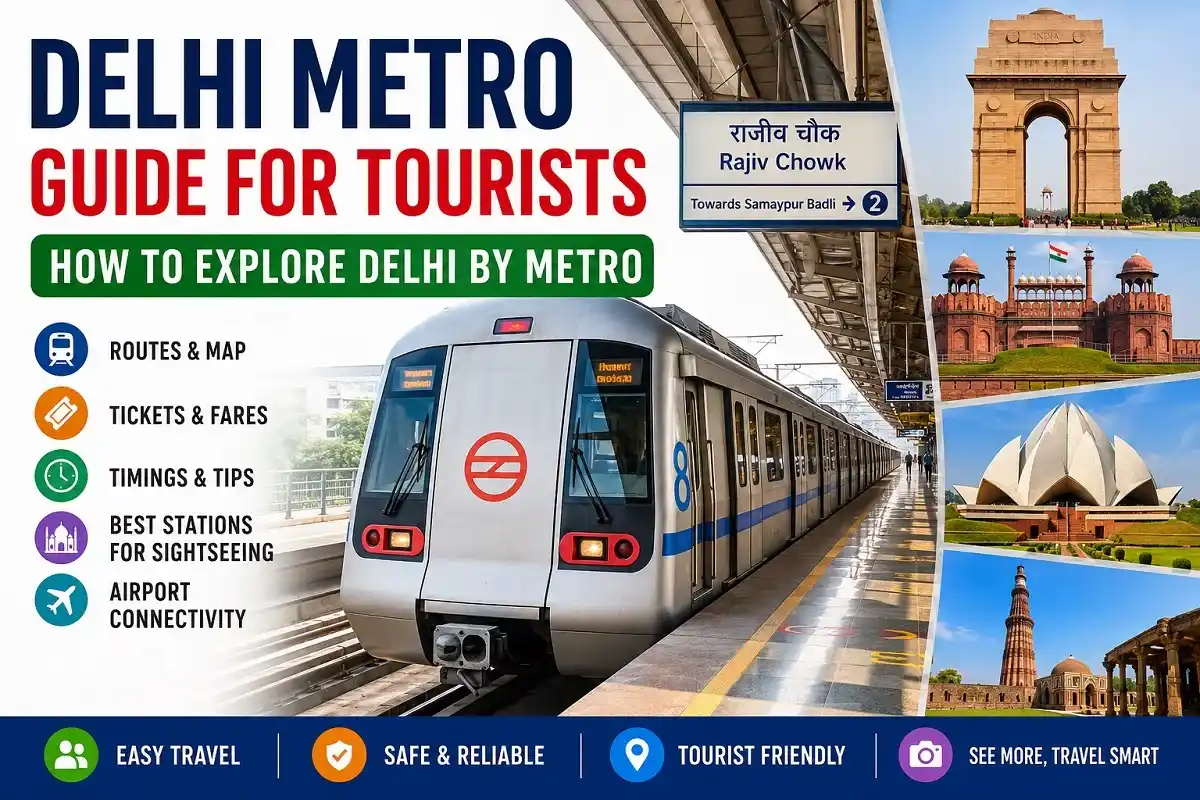
Yes. It’s widely considered one of the safest and most efficient ways to get around, with English signage, security screening at entry, and women-only coaches. Many major monuments are within walking distance of a Metro station.
Conclusion
For most foreign tourists, Delhi’s costs break down predictably: visa fees vary by nationality and should be checked individually, accommodation is your biggest lever (hostel to five-star spans a massive range), food is genuinely cheap if you eat where locals eat, and “foreigner-rate” monument tickets are a real but manageable add-on if you plan for them.
If you’re working with a tight budget, lean on the Metro, street food, and the free monuments — Delhi rewards travelers who are willing to walk and use public transport. If comfort matters more than cost, the mid-range tier ($50–90/day) gets you a genuinely good Delhi experience without luxury-hotel pricing. Either way, build your day-by-day budget around accommodation and transport first — food and sightseeing fees are easier to adjust on the fly.